IT, Telecommunications & Services · Consulting
Creating a clearer operating model for project and service delivery
A business-transformation engagement clarified how teams engage on new work, separated project and service responsibilities, and introduced a more consistent enterprise lifecycle.
- 30%
- reported project-success improvement in the first 3 months
01 · Context
The challenge
- There was no clear process for engaging the different business groups when a contract or project started.
- Customer timelines could be set without consultation with the Enterprise department, contributing to project delays.
- Delays led to customer complaints and dissatisfaction.
- Project Manager and Service Manager responsibilities were unclear.
- The Service Manager was responsible for both service and project management, contributing to delivery delays.
02 · Delivery
The approach
- 01Completed a gap analysis between the current and future operating states.
- 02Developed a project charter and formed a project team.
- 03Trained the team in project-management practices, tools, and techniques based on PMI, and service management based on ITIL.
- 04Developed the project plan.
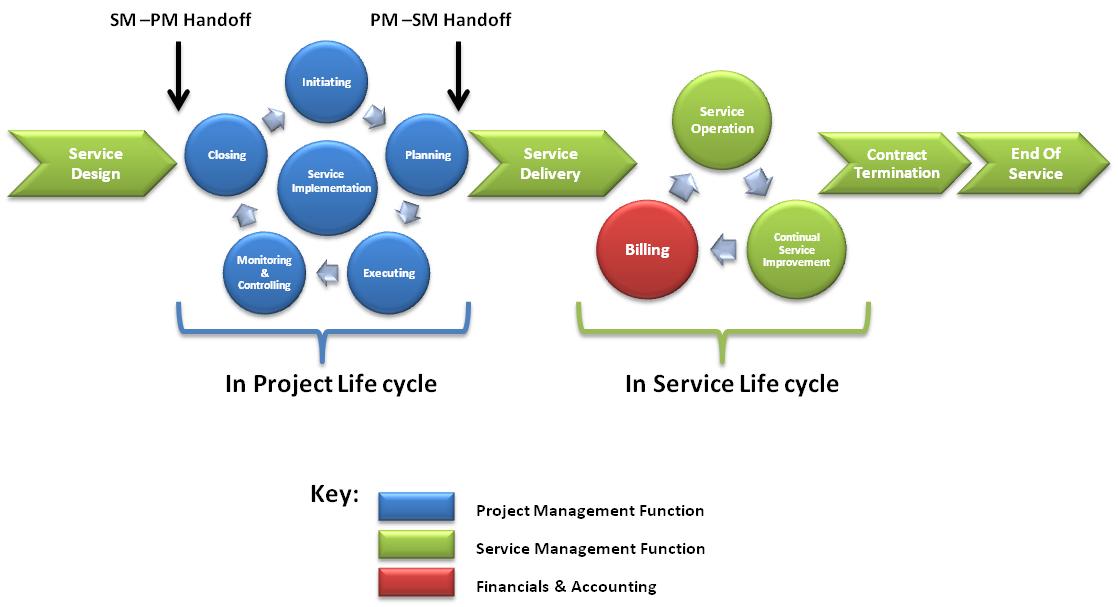
- 05Separated Project Manager and Service Manager functions in a new organizational structure.
- 06Developed standard operating procedures and templates for both functions.
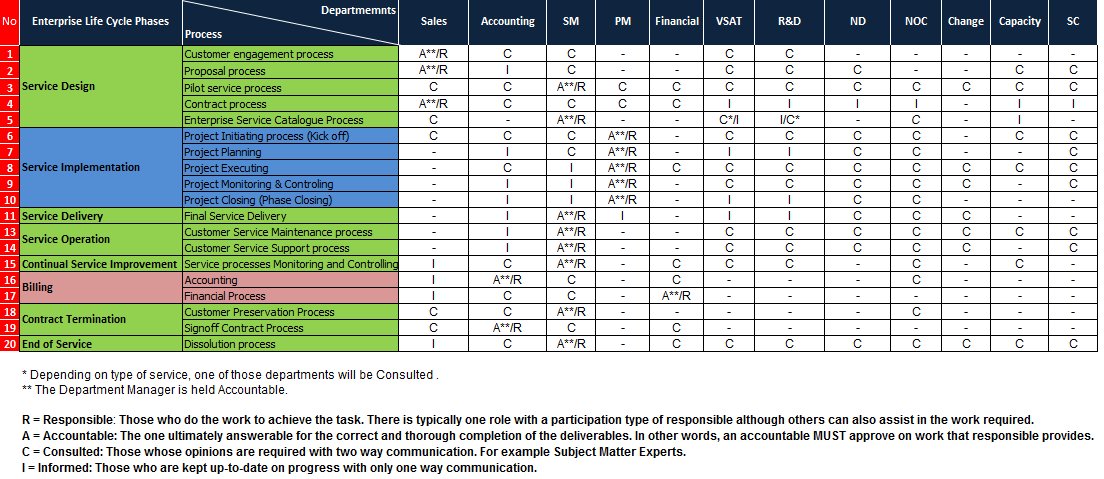
- 07Created a project-engagement process using a RACI relationship matrix.
- 08Implemented the new organizational structure.
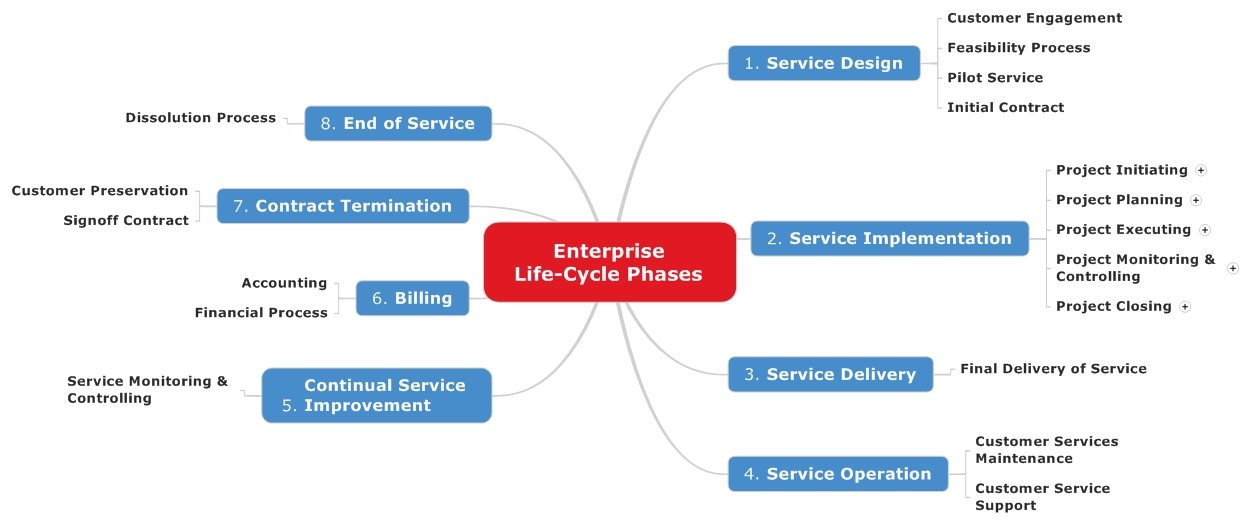
- 09Developed and implemented Enterprise Lifecycle processes.
- 10Included monitoring and control in the continuous-improvement process.
Engagement evidence
Measures and working visuals
Source report detail
Project timeline and takeaways
Delivery timeline
- 2 weeksGap analysisPhase 1
- 1 weekProject charterPhase 2
- 2 weeksProject-team developmentPhase 3
- 1 weekProject-plan developmentPhase 4
- 4 weeksProject implementationPhase 5
- 2 weeksFinal report, presentation, lessons learned, and closurePhase 6
Findings and recommendations in the report
- A clear process was established for engaging business groups when a new contract or project starts.
- Customer timelines were to be developed with Enterprise department consultation; the source reports that delays were eliminated.
- The report describes a reduction in customer complaints associated with fewer delays.
- The revised model clarified Project Manager and Service Manager responsibilities.
- The report records a 30% improvement in project success during the first three months; it does not define the success measure.
Client and employee identities are withheld. Reported figures are retained as source claims; discrepancies are noted rather than silently corrected.
03 · Outcomes
What changed
- 01A standardized enterprise lifecycle and cross-functional project-engagement process were documented.
- 02The report records a 30% improvement in project success during the first three months; the source does not define the success measure.
- 03Project and service manager responsibilities were clarified in the revised operating model.
- 04The report describes more realistic customer timelines, fewer delivery delays, and reduced customer complaints.
Client identity is withheld. Outcomes and measures are presented as documented in the engagement source material.